 Chockpoint
Mobile and web · Dock appointment scheduling · Driver check-in
AI-Powered Dock & Yard Management
Every truck through your gate, accounted for.
Dock scheduling and gate control, without the clipboard.
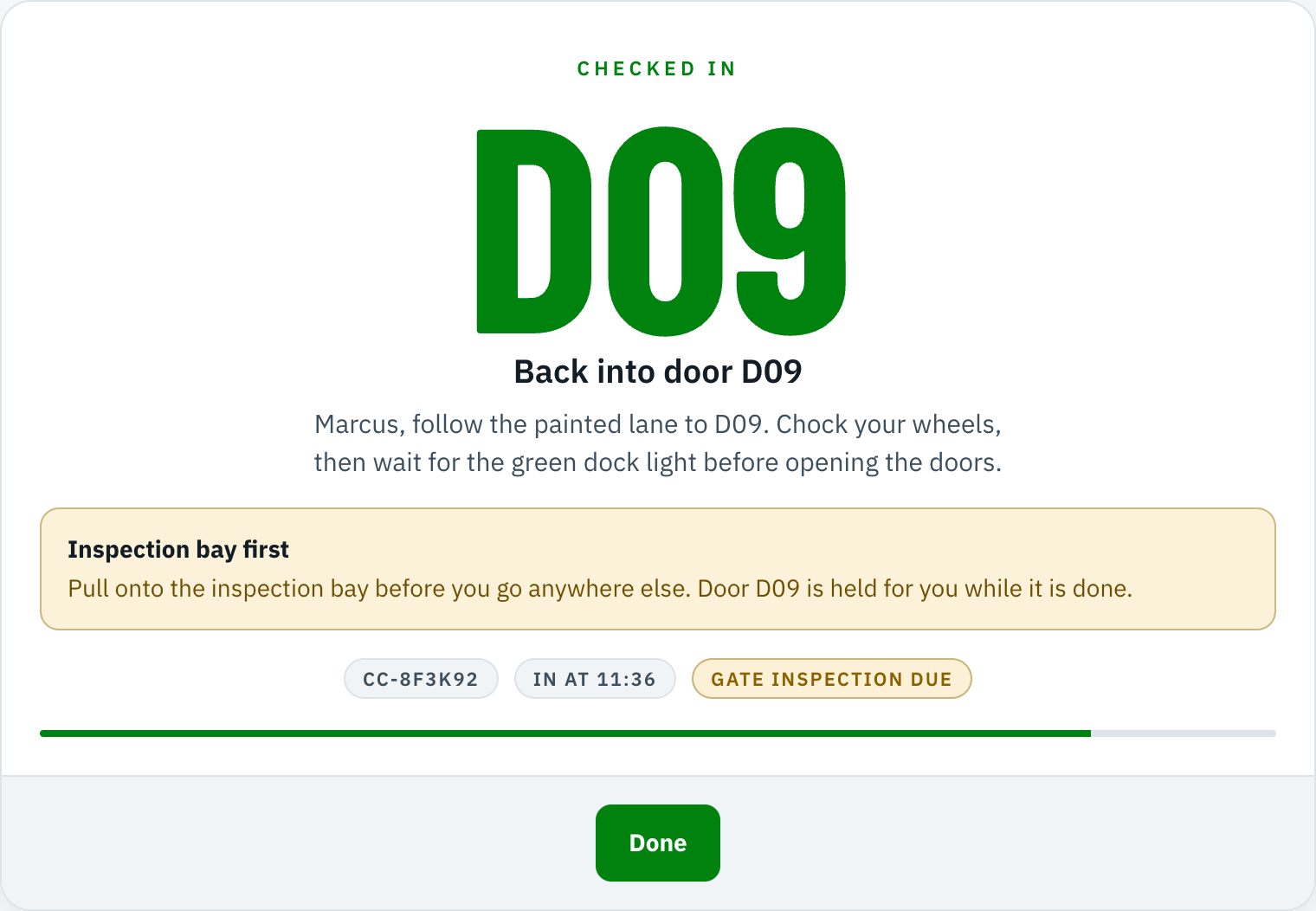
A driver holds up a QR code and gets a door number in about twenty seconds. Inspections, the weighbridge and the yard all hang off that one scan — and nothing leaves until the checks are done.
A mobile and web solution — an iPhone in the cab, an iPad at the pedestal, a browser in the dock office. Your data, your database.
The problem
What a gate costs you today
None of this is exotic. It is the ordinary friction of a paper gate house, and it shows up as dock time.
Paper at the gate house
The guard writes the driver and trailer on a sheet. The dock office learns a truck arrived when somebody walks that sheet over.
Doors given out from memory
Whoever holds the radio keeps the door map in their head. Two trailers get sent to the same door, and one backs out and waits.
Turned-away trucks vanish
A driver sent away for arriving early, or for a cancelled booking, is recorded nowhere. Nobody planning next week ever sees the pattern.
Watch it work
See Chockpoint in Action
See how a truck moves from appointment to gate, yard and dock — with Chockpoint connecting every step.
52 seconds, captioned, no sound needed. Every product screen in it is the real thing.
The platform
Dock, gate and yard in one place
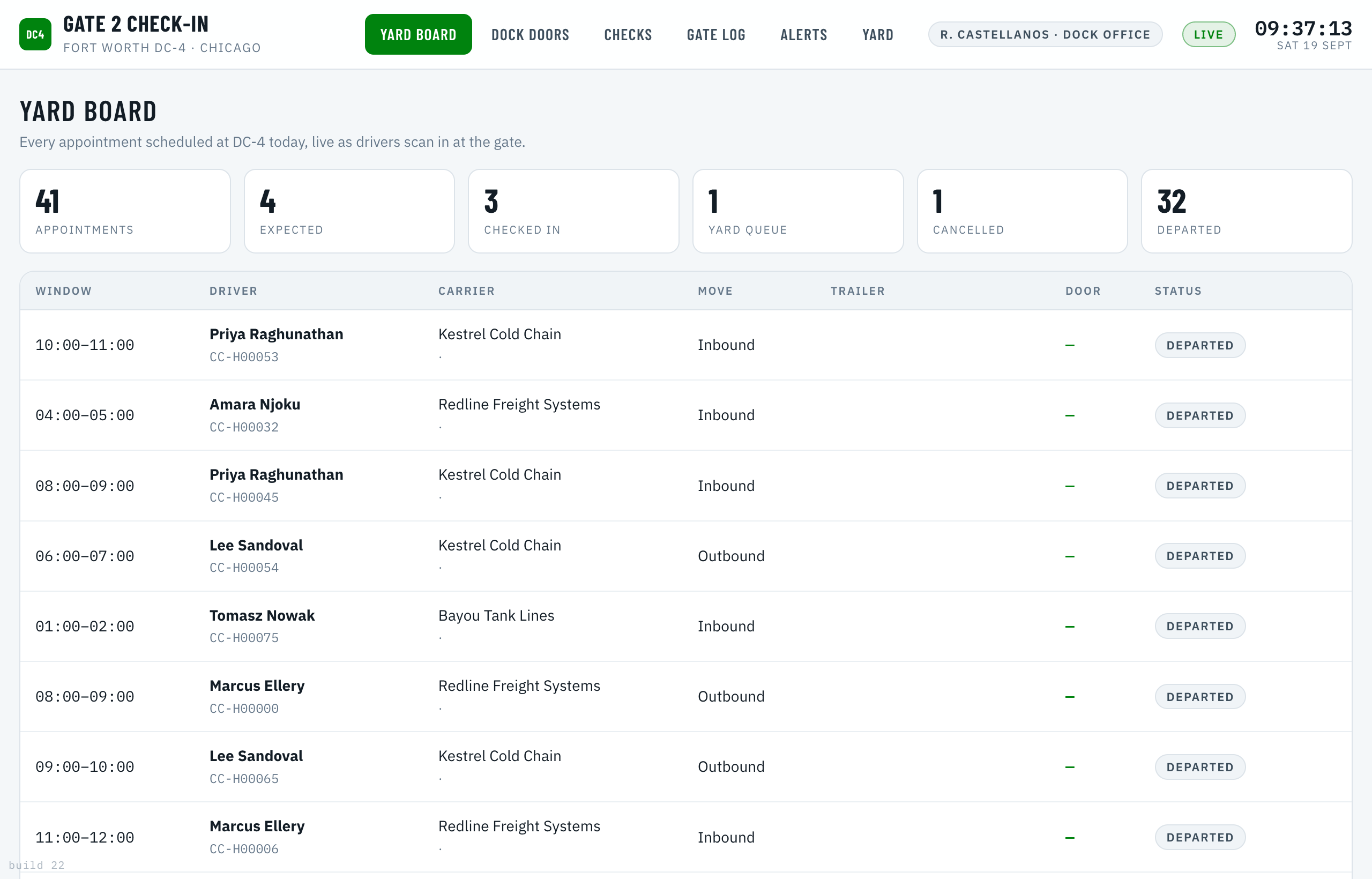
Chockpoint brings dock scheduling, truck appointment management, gate operations, driver check-in, inspections, yard visibility and operational intelligence into one platform, so the gate house, the dock office and the haulier are all working from the same record.
What it does
One scan, and the rest follows
Check-in that ends in a door number
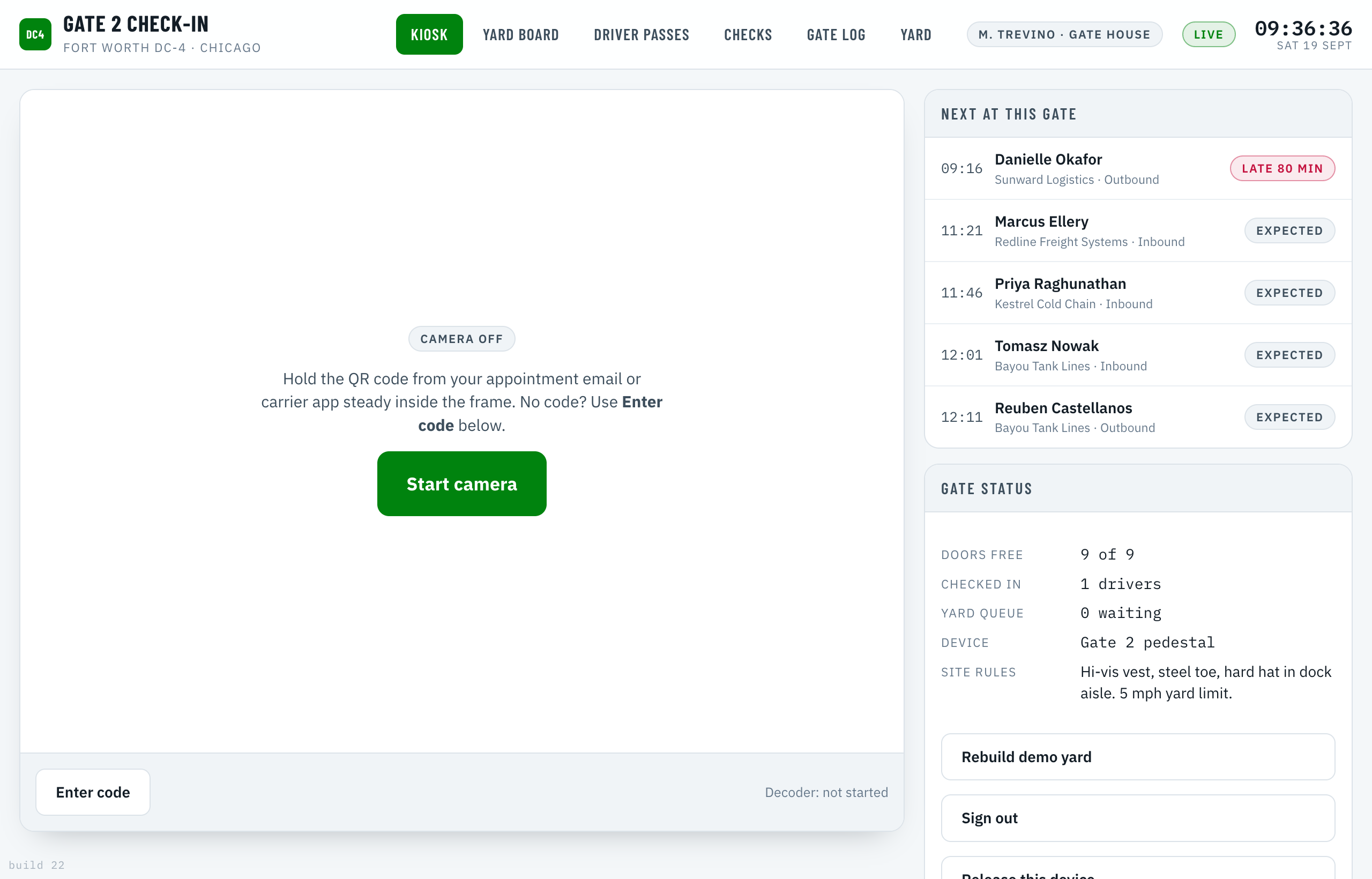
Scan, confirm the load, agree the site rules, go. The door is reserved inside one database transaction, so two kiosks scanning at the same instant cannot be given the same door.
- Chilled loads only get doors with power
- Hazardous loads only get the door rated for them
- No door free? A named yard space, not "wait over there"
Inspections that actually hold the trailer
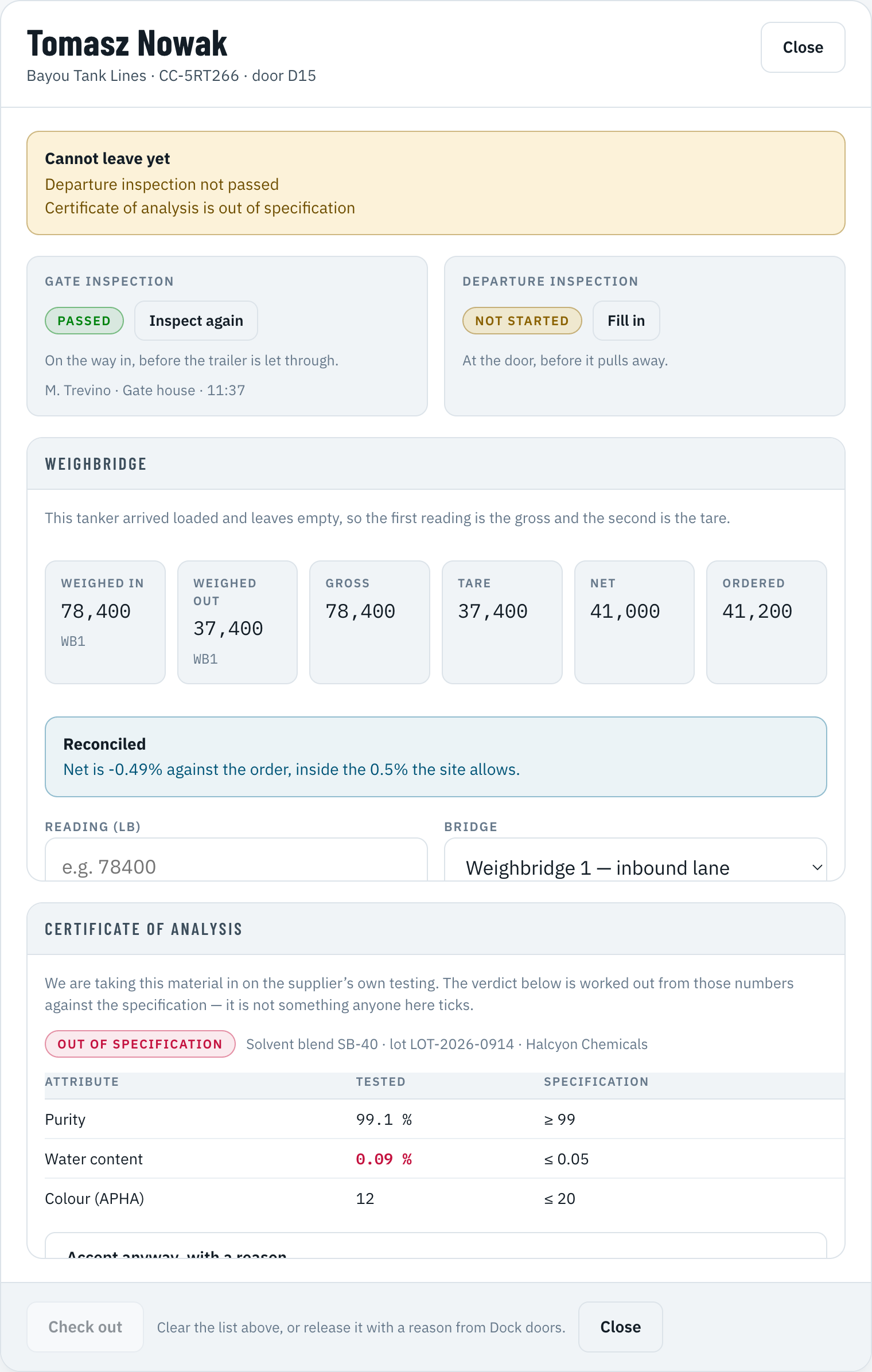
A gate inspection on the way in and a departure inspection at the door. A blank is not a pass, a defect has to be described, and a critical defect at the gate refuses entry and gives the door back.
- Different questions per trailer — reefer, tanker, sealed inbound
- Bulk is weighed in and out; the net is derived, never typed
- Certificates of analysis are judged against spec by the system, not ticked by a person
The yard, and whether they're in it
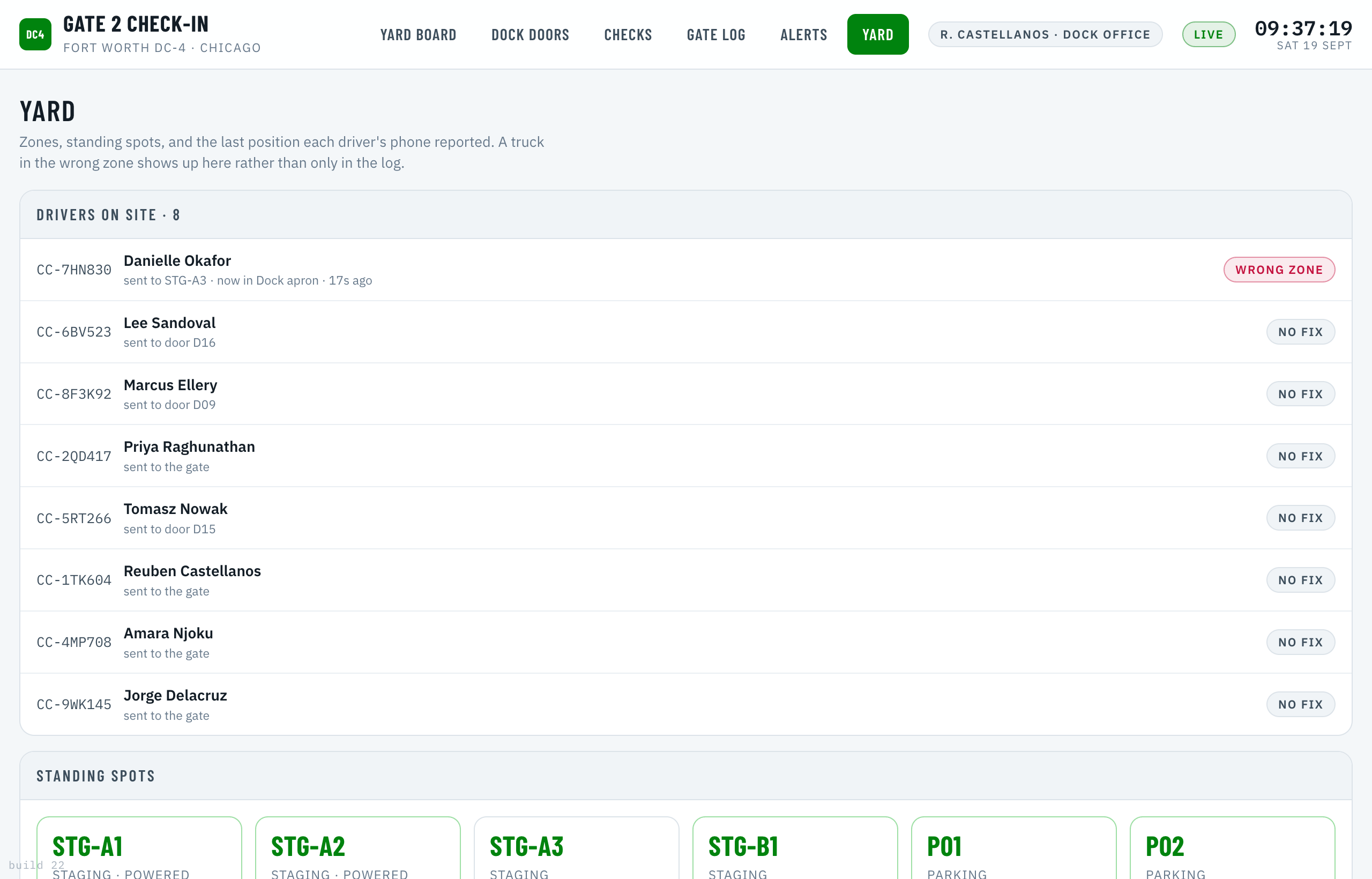
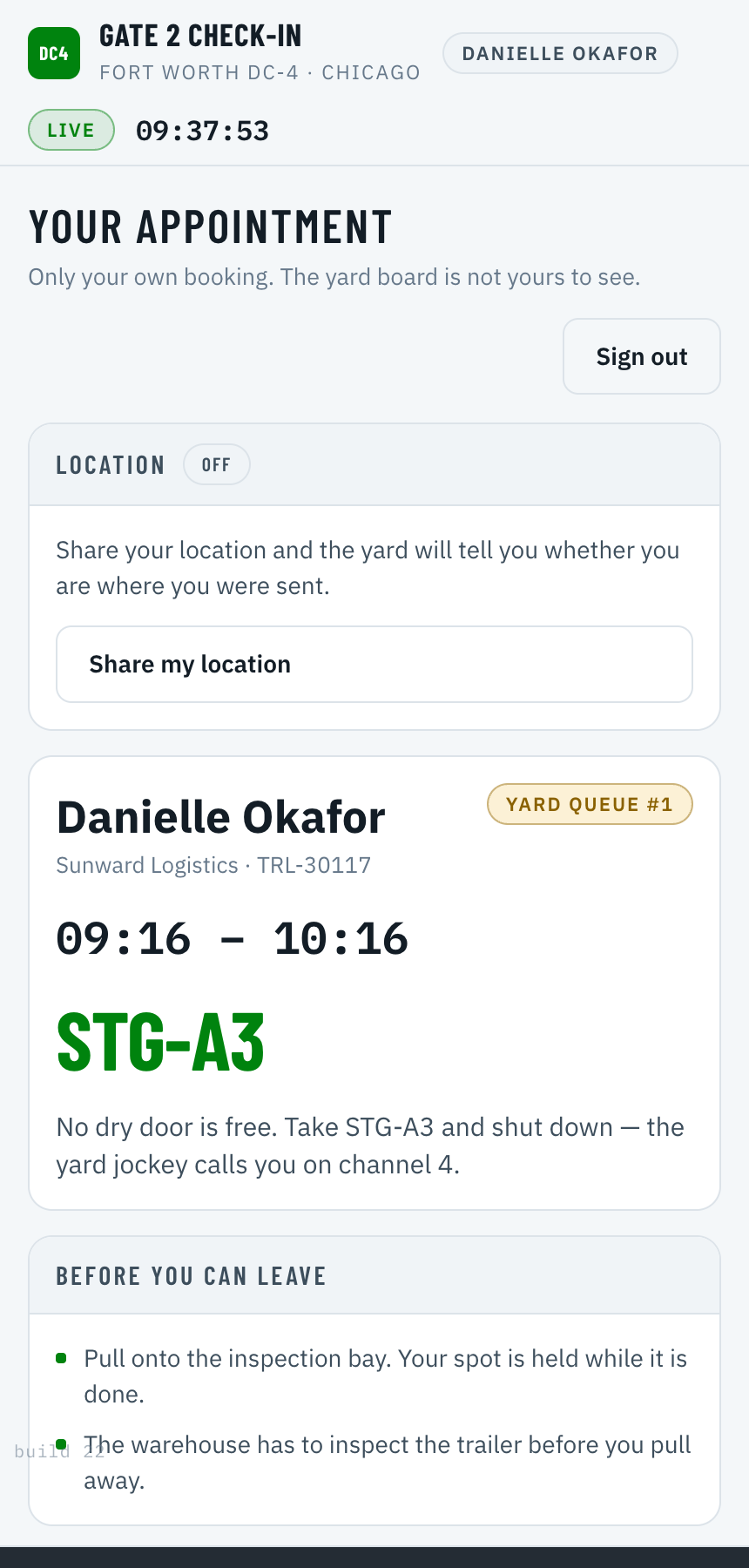
Named standing spots rather than a marked lane, with GPS zones so a driver in the wrong place shows up on a screen instead of over the radio.
- Powered spots reserved for the trailers that need power
- Longest-waiting driver called in when a door frees
- A missing position means "we don't know", never "they're not here"
Your hauliers get their own screen
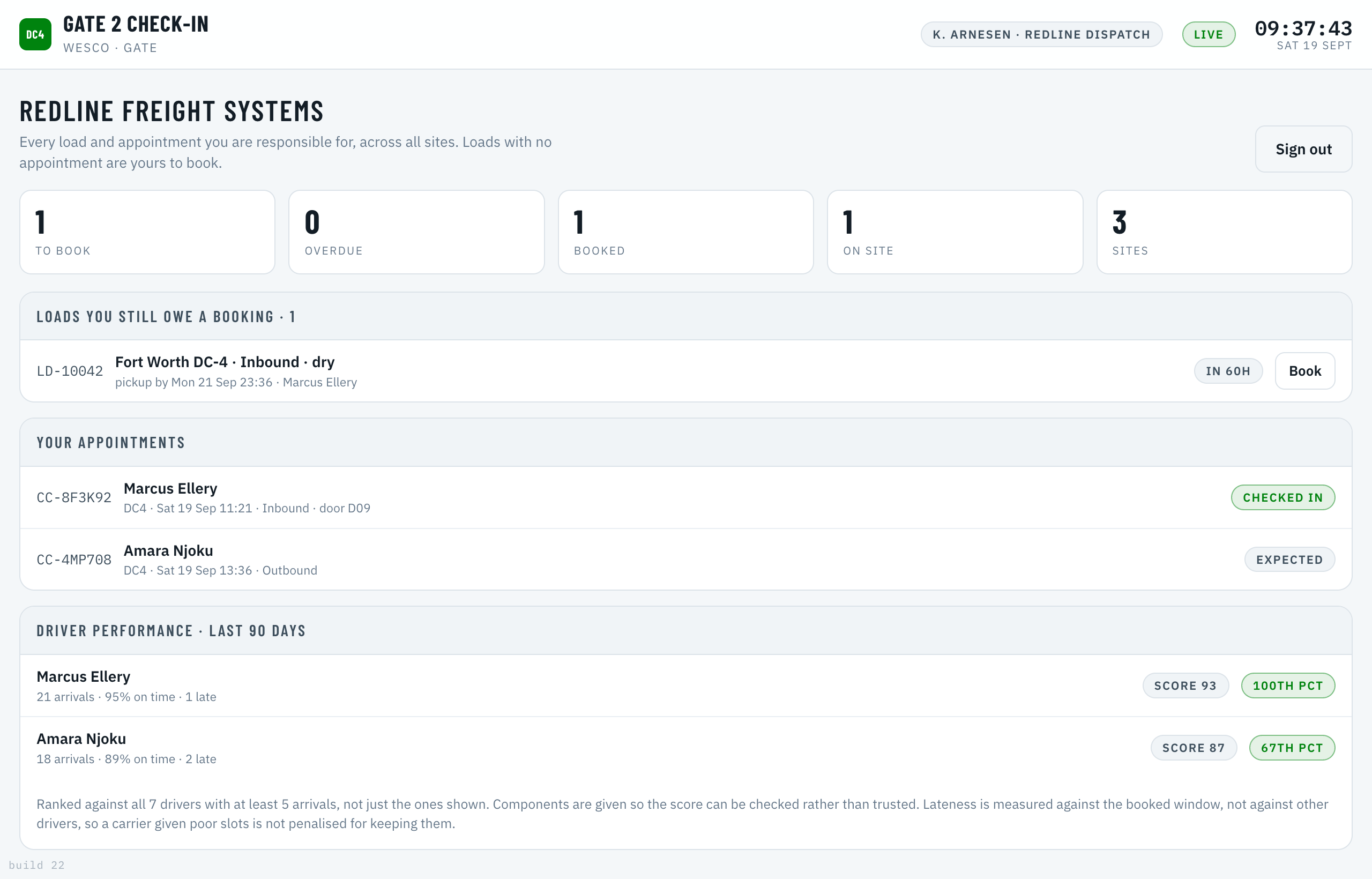
A carrier runs into several of your sites, so they see one list across all of them — every load they still owe a booking for, and how long is left to make it.
- They book their own slots without phoning the dock
- Unbooked loads get chased automatically, escalating rather than repeating
- They see only their own work — never another haulier's
Mobile and web
One system, wherever the work happens
The same database, the same rules, the same screens — sized for whoever is holding the device. A driver in a cab, a guard at a pedestal, a planner at a desk.
On the driver's own phone
At the gate, on a kiosk or a browser
Native iPhone and iPad
Distributed privately to your organisation. VisionKit scanning reads a code held at an angle out of a cab window, which a web camera struggles with.
Any browser, no install
Add it to a home screen and it runs full screen, keeps the display awake while scanning, and says plainly when it cannot reach the gate service.
Nothing to reconcile
Both talk to the same database. A driver checked in on a phone is on the dock office board the moment it happens.
Who uses it
Four people, four different screens
Everyone signs in, and each role only ever sees what belongs to them — enforced on the server, not by hiding buttons.
Their own booking and nothing else. Checks themselves in, gets a door or a yard spot, and is told what is holding them up before they can leave.
Scans drivers in, runs the gate inspection, works the weighbridge, and reads the log of everyone turned away and why.
The yard board, the dock wall, where trucks actually are, the departure inspections, and the loads nobody has booked yet.
Every load and appointment they are responsible for, across every one of your sites they run into.
Delivery
How it reaches your sites
A native app, distributed privately to your organisation through Apple Business Manager. It never appears on the public App Store, and your MDM can push it to a fleet of gate kiosks.
The same system as a web app — add it to a home screen and it runs full screen, keeps the display awake while scanning, and tells you plainly when it cannot reach the gate service.
It runs on your own cloud account. Driver details, licence numbers and positions stay in a database you own and can point your own retention rules at.
Doors, staff, bookings and clocks all belong to a facility. Two warehouses can hold the same door code, and a pass booked at one site will not open a door at another.
Where it honestly stands
This is a working system, not a slide deck — every screen on this page is a screenshot of it running against a live database, and it carries 240 automated checks. It is ready for a pilot at one site. What it is not yet is plugged into your transport system: appointments are entered by hand until that feed exists, and that is the first piece of work on any real deployment. I would rather say that up front than discover it with you in month two.
Get in touch
Worth twenty minutes of your time?
Tell me about your gate and I will show you the system running against realistic data — not a demo reel. If it is not a fit I will say so.
saurabharora8690@gmail.com